When you order a new countertop, the edge is one of the last decisions you'll make, and one of the easiest to get wrong if nobody explains what the names actually mean. "Ogee" and "half bullnose" don't mean much until you've seen the shape, so here's what each of the common countertop edge profiles looks like in cross-section, and when we'd point a customer toward one over another.
We cut every edge profile in-house at our Akron shop, on the same slab you picked out, so you're not choosing from a limited stock list. Here's a rundown of the countertop edge types you're most likely to run into while shopping.
Eased edge
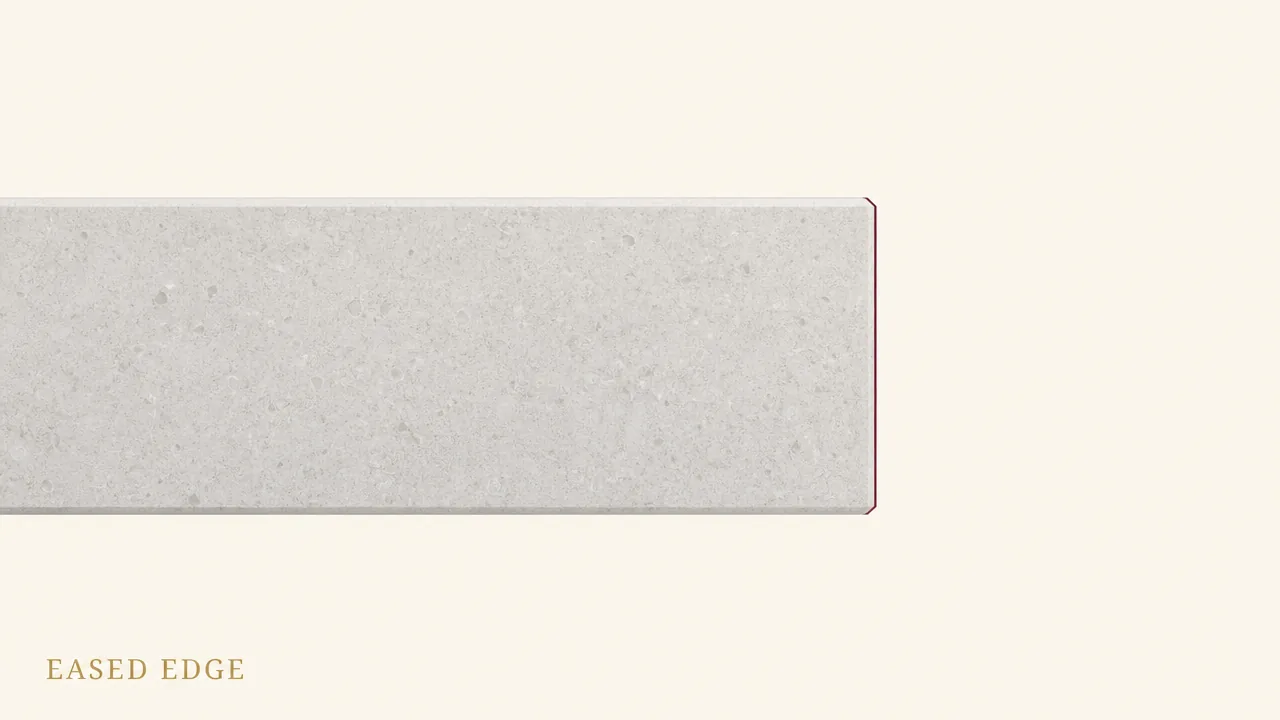
Picture a standard square edge with the sharpest part of the corner knocked off, just enough that your hand doesn't feel a hard line running along the top and bottom of the slab. The face of the edge stays flat and vertical. It's the cleanest, most modern-looking option, it's the fastest to fabricate, and it's usually the standard edge included in a countertop quote before any upcharge for something fancier. If you want a kitchen that reads as simple and contemporary, this is usually the right call.
Half bullnose
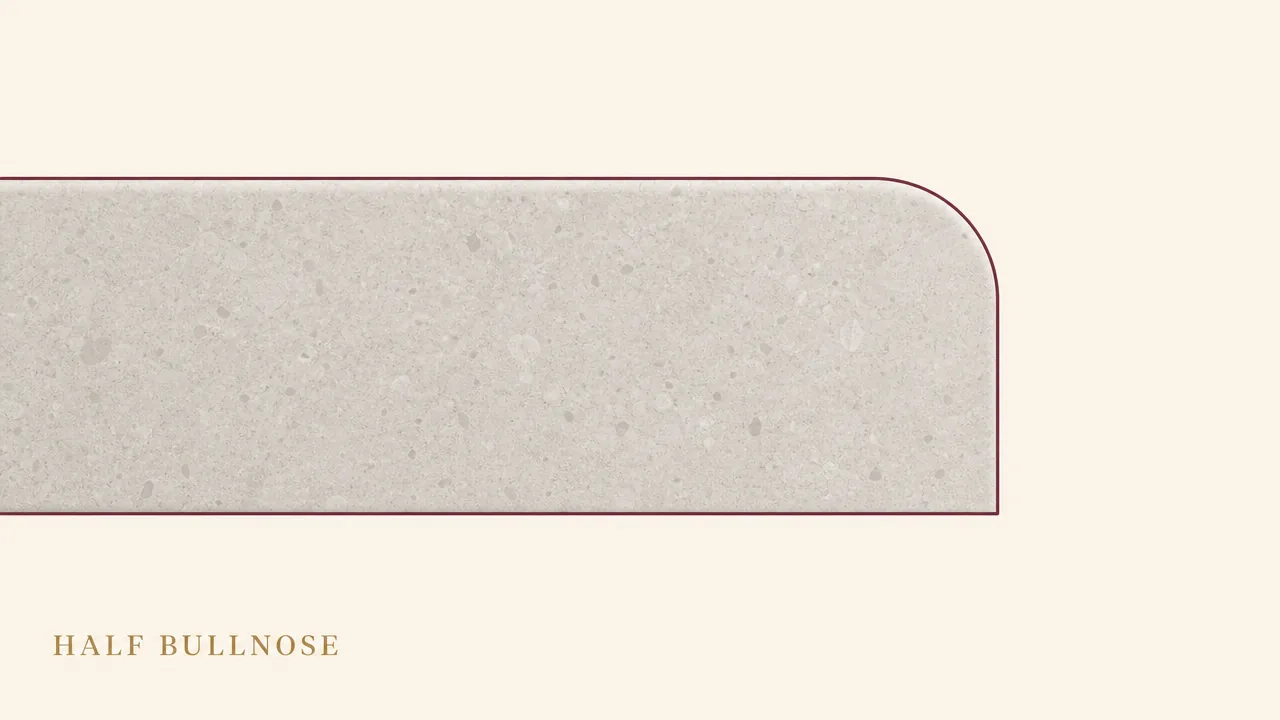
A half bullnose rounds the top corner of the slab into a smooth curve, while the bottom edge stays squared off. From the side, it looks like the edge was rolled over on top only. It softens the look of the counter without going as rounded, or as costly to cut, as a full bullnose. It's a common middle-ground choice for kitchens that want to soften hard lines without going fully traditional.
Full bullnose
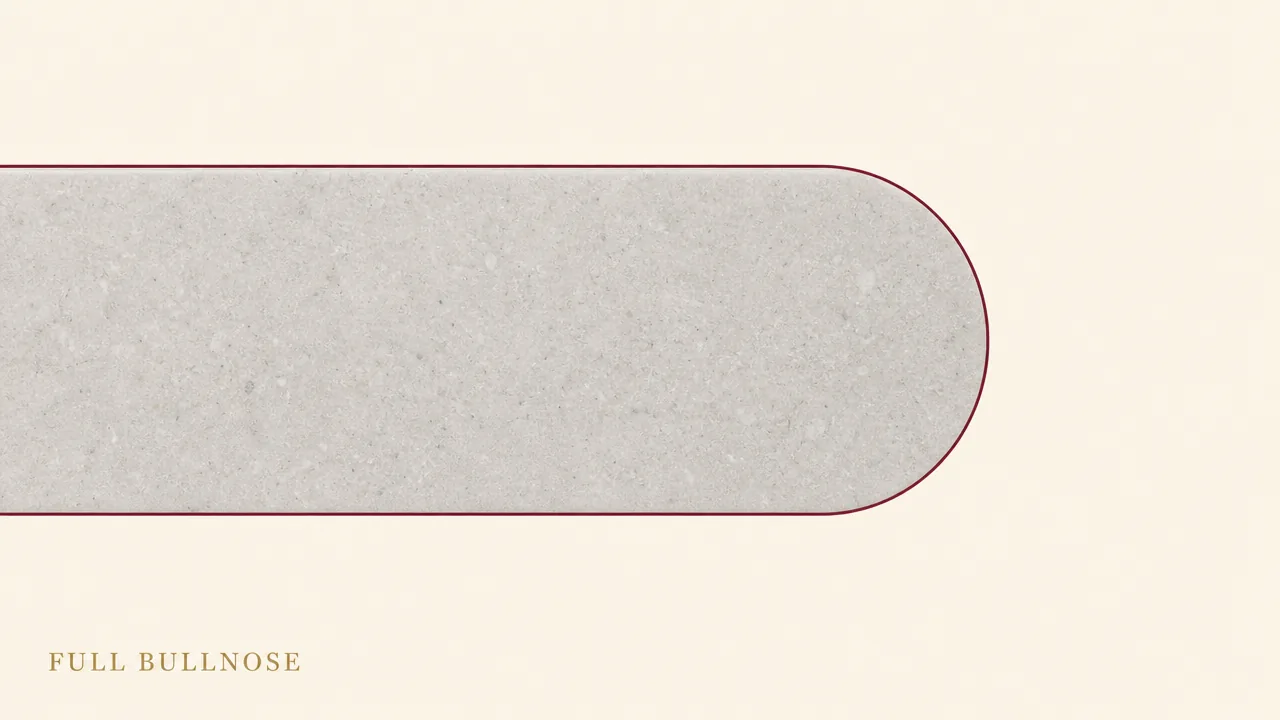
A full bullnose rounds both the top and bottom of the edge into one continuous curve, so the cross-section looks close to a half-circle, with no flat vertical face left at all. It's the softest, most rounded-looking edge on the list, and also the safest in a literal sense: there's no corner to catch a hip or an elbow on. Family kitchens with young kids, or households with an older family member who spends time in the kitchen, often lean toward a full or half bullnose over a sharp-edged ogee or crisp eased edge for exactly that reason.
Bevel edge
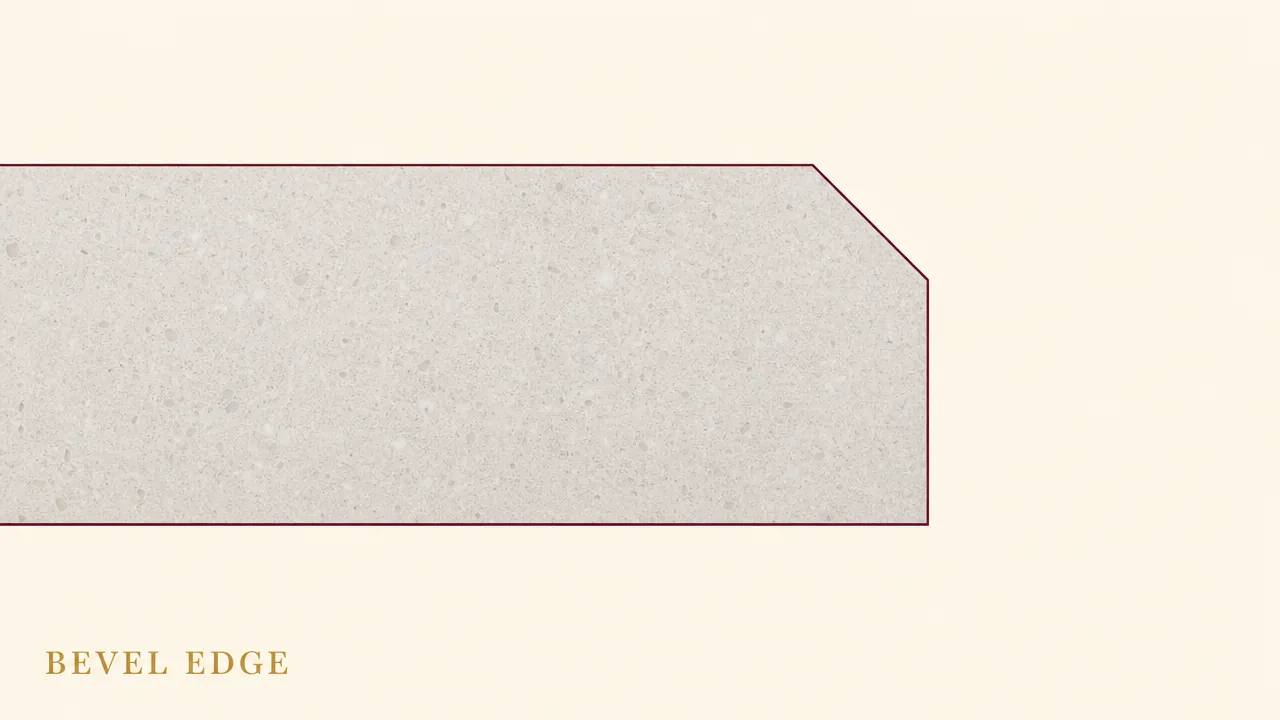
A bevel edge replaces the sharp corner with a flat angled cut, most commonly around 45 degrees, running between the top surface and the vertical face of the slab. It reads as more architectural and faceted than a rounded edge, and it catches light differently, which is part of why it's popular on darker granite and quartz where a crisp line shows off the material. It's a good option if you want something with more presence than an eased edge but don't want the fuller curve of a bullnose.
Ogee edge
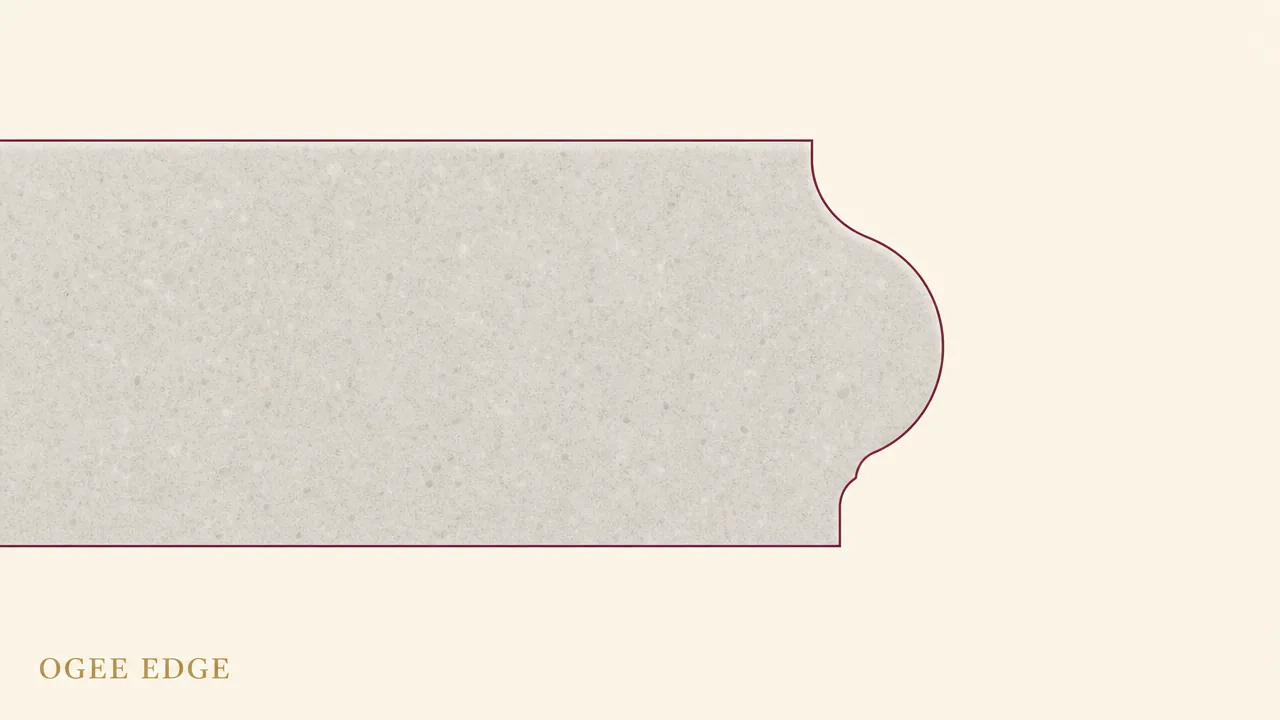
An ogee is the most ornate profile on this list: an S-curve combining a concave arch flowing into a convex one, similar to the classic molding profile you'd see on furniture trim. It's noticeably more labor-intensive to cut and polish than the other profiles here, since the saw has to follow a compound curve rather than a single arc or angle. We see it most often in traditional or formal kitchen designs, and less often in kitchens with small children underfoot, since the raised lip and pronounced curve create more surface for a bump than a simple eased or bullnose edge.
Waterfall edge
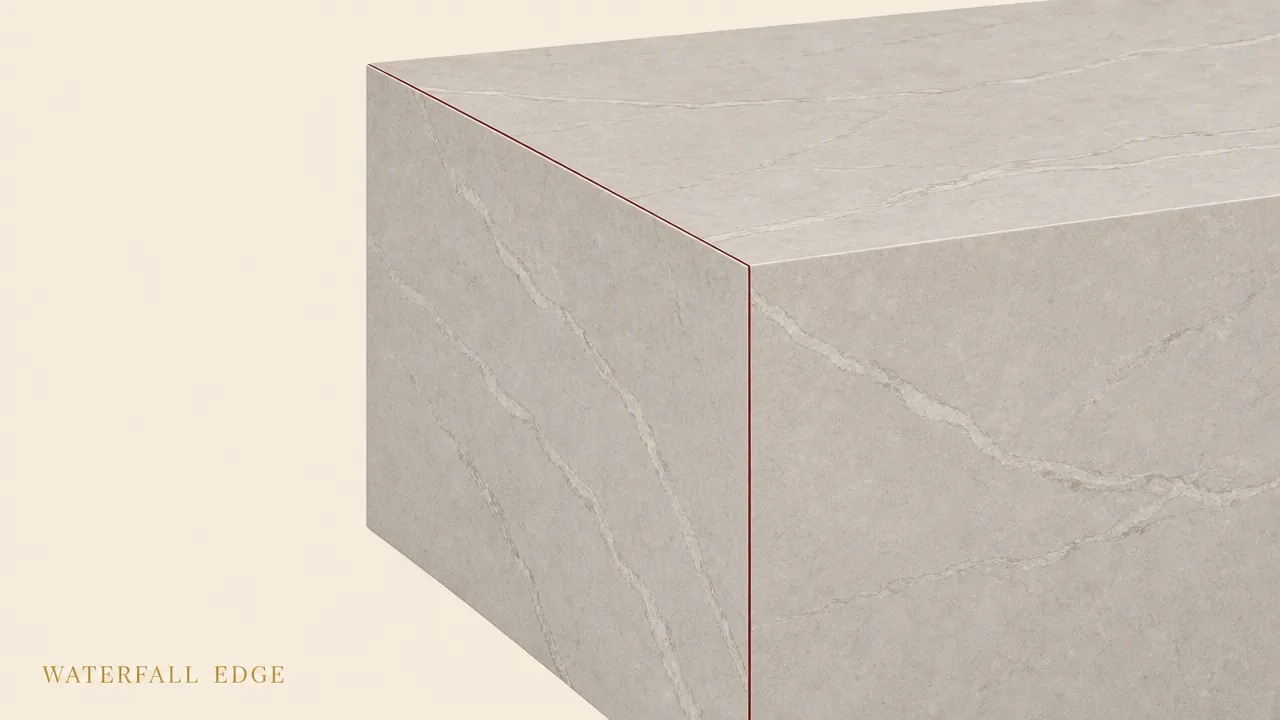
A waterfall edge isn't really a perimeter treatment like the others. It's what happens when two pieces of slab are mitered at 45 degrees and joined so the stone appears to flow continuously from the horizontal countertop straight down the vertical side of an island or cabinet end, all the way to the floor. Done well, the seam nearly disappears and the veining lines up across the joint. It's the most visually dramatic option here, and also the most demanding to fabricate: precision cuts, careful pattern matching, and a lot more shop time than any single edge profile.
Choosing the right edge for your project
There's no wrong answer here as long as it fits how the kitchen gets used. A busy family kitchen usually does better with a softer, rounded profile. A formal dining or entertaining space can carry an ogee or a crisp bevel without anyone bumping into it. And if the island itself is meant to be the visual anchor of the room, a waterfall edge does more for the space than any perimeter profile could.
Because we fabricate every edge ourselves rather than ordering pre-formed stock pieces, we can pair a specific profile with the material, thickness, and countertop overhang you're planning, and tell you upfront if that combination needs extra support before it leaves the shop.
If you're weighing edge options against a specific material, our quartz and granite pages cover how each material takes a polish and holds up over time, which affects how crisp a detailed profile like an ogee will look years down the road. Our services page covers the full fabrication and installation process from template to final polish.
Bring us a rough sketch of your kitchen or a photo of a layout you like, and we'll walk you through which edge profiles make sense for your space. Call (330) 882-4220 or reach out through our contact page for a free estimate.
FAQ
What is the most popular countertop edge profile? Eased edge is the most commonly chosen profile because it looks clean, works with almost any kitchen style, and is typically the standard edge included in a countertop quote without an upcharge. Bevel and half bullnose are close behind for kitchens that want a bit more detail.
Which countertop edge is best for families with young kids? A full or half bullnose is generally the safer choice for households with small children, since the rounded profile removes the sharp corner that a square eased edge or a raised ogee detail would otherwise leave at counter height.
Does a fancier edge profile like ogee or waterfall cost more? Yes. Profiles that require more saw passes and hand polishing, like ogee, and techniques that require mitered joints and pattern matching, like a waterfall edge, take more shop time than a simple eased or bevel edge, and that labor is reflected in the price.
Can any edge profile be used with any countertop material? Most edge profiles work across quartz, granite, and quartzite, though very thin material or heavily veined stone can limit how dramatic a profile like a full bullnose or ogee will look. We can tell you during your estimate whether your chosen slab and profile pair well together.